How to Translate Audio to English: Beginner to Advanced
🎊In daily work and study, the need to translate audio to English is growing. The process breaks down into two steps: first convert speech to text, then translate it. 📢With a clear approach and the right methods, it’s easier than you might think. 💪This guide offers detailed answers to help you along the way!


How to Translate Audio to English: Beginner to Advanced
Translating audio to English is a common need in cross-language communication. It involves two steps: converting speech to text via voice recognition, then translating into English—drawing on speech recognition, semantic understanding, and machine translation technologies. Audio quality, accent variations, and terminology density also affect translation results. So how to translate audio to English❔ Read on to find out~
🎈Audio Preprocessing: The Hidden Key to Translation Quality
Many people tend to directly feed audio into translation tools without doing any preprocessing at all. This is like using a blurry photo for facial recognition—even highly advanced algorithms may struggle to deliver accurate results.
| Operation Type | Function | Use Case |
| ▫ Noise Reduction | Kicks out background noise and static | Outdoor recordings, phone interviews |
| ▫ Volume Adjustment | Evens out the volume to stop it from jumping up and down | Multi – speaker conversations, remote meetings |
| ▫ Channel Separation | Distinguishes and separates speakers | Group interviews, panel discussions |
| ▫ Format Conversion | Converts to universal formats | Audio files with special encoding |
🔎Audio Translation: A Step – by – Step Tutorial for Beginners
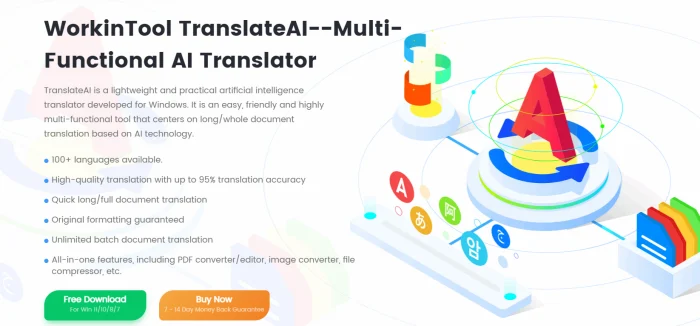
🔑TranslateAI
A translation software that’s both professional and handy. It supports translating images, text, video, and audio, and also offers features like image conversion, document compression, and photo restoration to help improve your work efficiency.
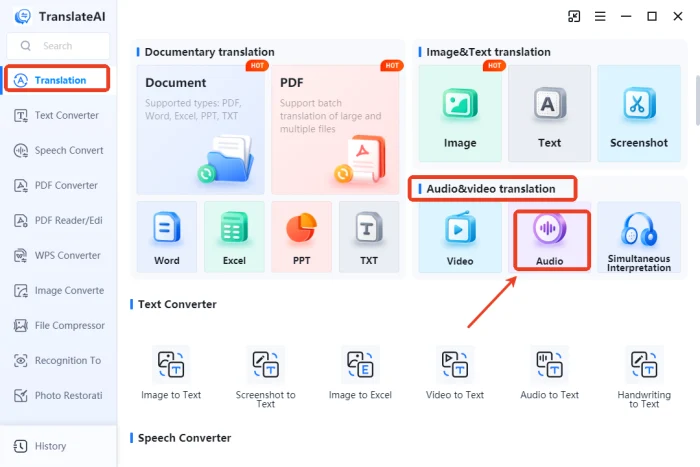
◾ Step 1: Open software, find “Audio” under “Audio & Video Translation” and click.
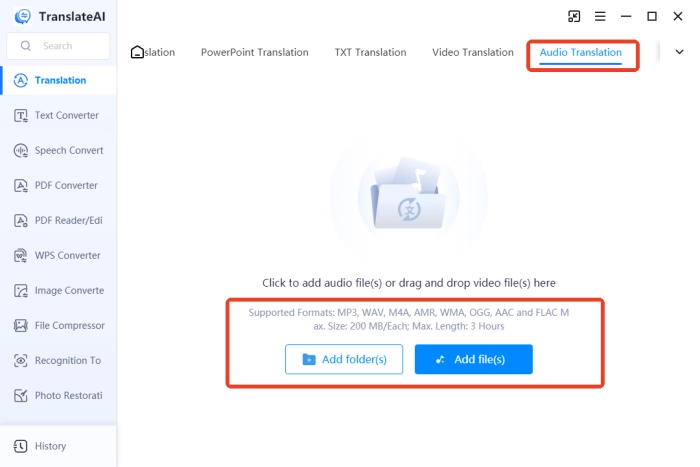
◾ Step 2: Add files, support various formats, each under 200MB and 3 hours.
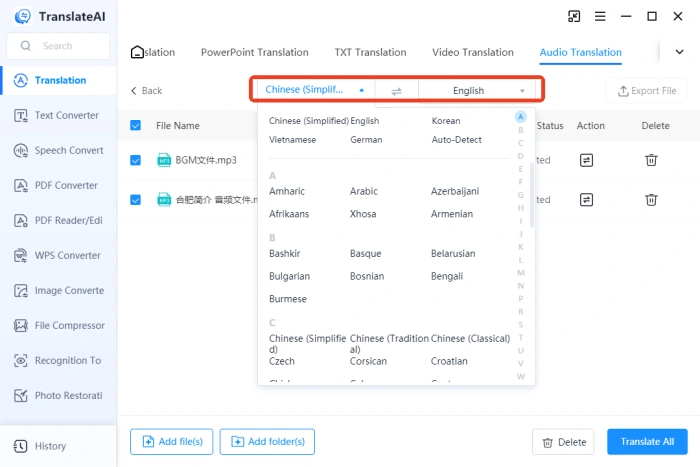
◾ Step 3: Set source language, select “English” as target language.
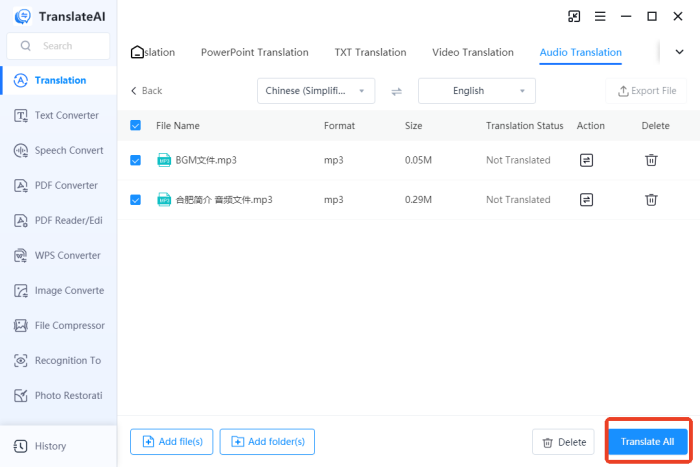
◾ Step 4: Confirm all, click “Translate All” in bottom – right, wait for done.
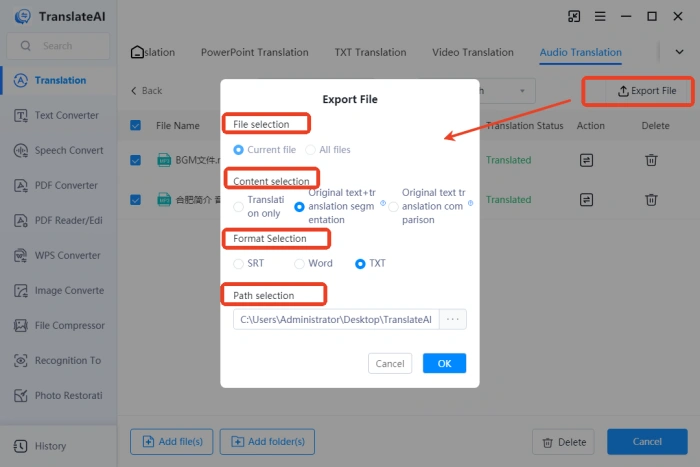
◾ Step 5: In “Export File” window, adjust content, format, save path, etc. and export.
🔔Key Notes: Details That Matter During Translation
Audio translation goes beyond language conversion—it involves cultural understanding, style consistency, and compliance checks. Following these four points will help ensure quality.
🔸 Guarantee Legal Compliance: Before starting the translation, make sure to verify copyright ownership and confirm that you have the proper authorization. Adhere to laws and platform rules. Handle sensitive information with great care to avoid legal risks arising from infringement.
🔸 Show Respect for Cultural Context: Accurately capture cultural nuances and contextual implications. The same expression may carry different meanings in different cultures. Avoid over – interpreting or misreading to ensure natural and accurate translations.
🔸 Uphold Consistent Style: Keep vocabulary, sentence structure, and tone in line with the original. Use consistent terminology throughout—avoid using multiple translations for the same concept. Style consistency improves the overall quality and readability.
🔸 Check Grammar & Polish Drafts: Watch out for grammar and spelling mistakes during translation as they impact accuracy and flow. After finishing the first draft, go over it carefully to correct errors and improve professional quality.
✨Quality Review: Translation Complete ≠ Job Done
Don’t rush to submit or publish after translating. Unchecked translations often have mistakes. Use this checklist to cut down on post-release revisions.
📝 Review Checklist:
✅ Listen to the Original Audio
| Compare bit by bit for omissions or errors, focusing on fast speech or heavy accents. Listen while reviewing the translation. Replay unclear sections multiple times, slowing playback if needed to ensure accuracy. |
✅ Verify Proper Nouns
| Check the spelling of names, places, organizations, and brands. Errors here can damage credibility. Consult official websites or authoritative sources, especially for uncommon foreign names or niche organizations. |
✅ Validate Data and Figures
| Confirm accurate conversion of numbers, dates, currencies, and units. Date formats and measurement units vary by country and are likely to have conversion errors. Double – check each figure to avoid decimal or unit mistakes. |
✅ Read the Full Translation
| Read through from start to finish. Check for correct grammar, natural expression, and contextual flow. Translators often focus on individual sentences and miss the overall picture. A full read – through catches inconsistencies and improves readability. |
✅ Get a Second Opinion
| When possible, ask a colleague or friend to review. Fresh eyes often catch what the translator misses. For important documents, arrange a blind review—checking the translation without seeing the original—to ensure it reads smoothly and well. |
🌈More to Share
Translating audio to English effectively helps eliminate language barriers and promotes cross – cultural communication. It finds wide application in education, business negotiations, media production, and travel. Mastering suitable methods and techniques can boost both efficiency and accuracy, enabling smooth communication across diverse language backgrounds. For convenient audio translation, you may consider using TranslateAI. It supports a multitude of languages, is user – friendly, and delivers reliable quality. Why not give it a try❕

Related Article
 How to Translate Spanish Audio to English | Inventory of Useful Tools How to Translate Audio from Spanish to English | 4 Methods Worth Trying How to Translate Emails to English on PC | In/Outside Email